What To Fix
Social media platforms pay creators tens of billions every year, and almost none of it is visible. There is no official public archive of who gets paid, how much, or whether paid actors or content comply with platforms’ own rules. Platforms may reward hate speech and disinformation, fund foreign accounts posing as local voices, and pull revenue away from news and public interest content. Their monetisation products can also be used to pay for coordinated influencer campaigns during elections — as was the case in Romania — facilitate money laundering and power pedocriminality.
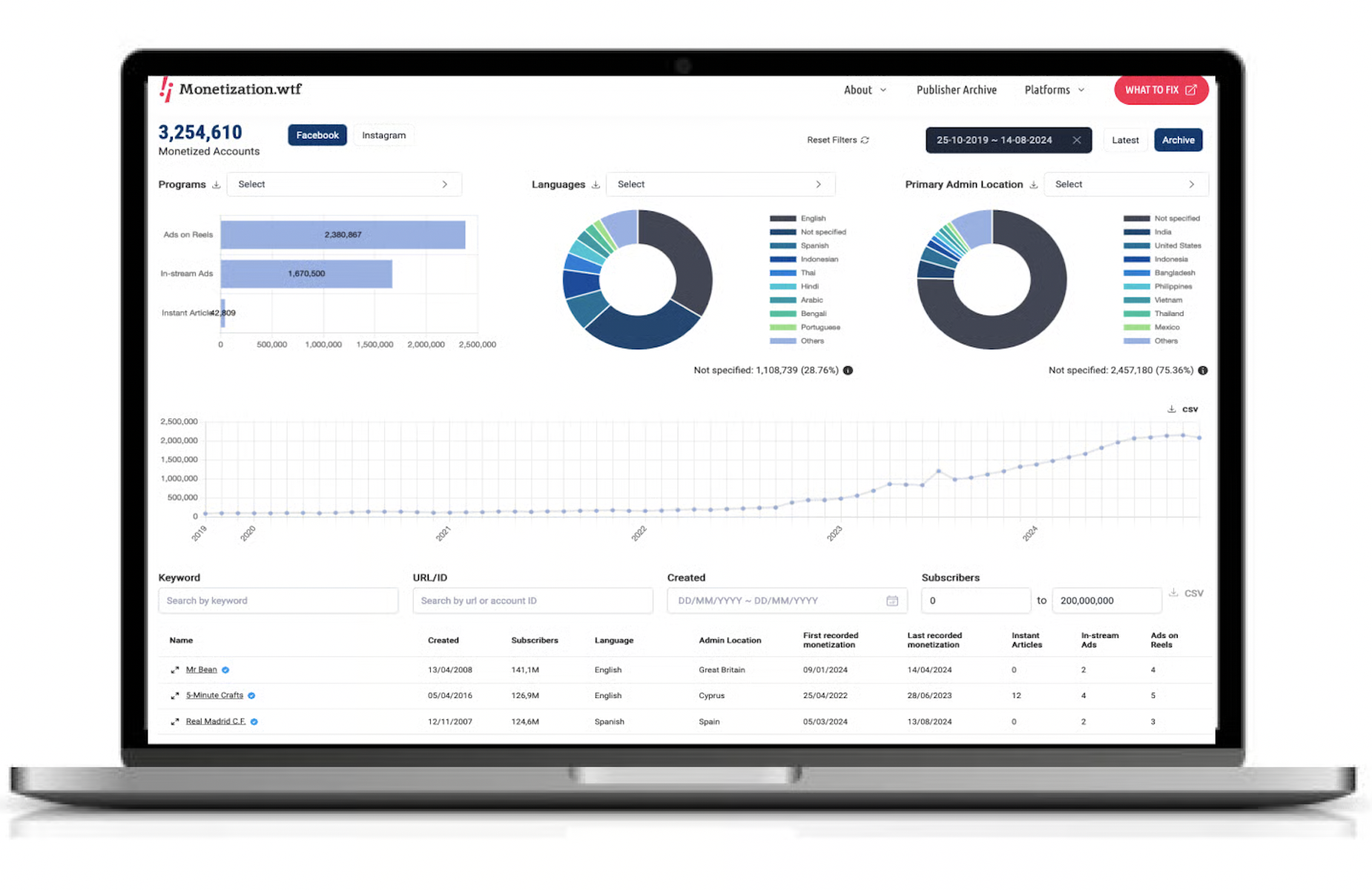
Meta does release snapshots of some of this information, but no historical records, and its releases could stop at any time. WHAT TO FIX is a tech nonprofit that built the only public archive of that data: 3 billion entries across 21 million accounts, searchable with 12 filters. Journalists and researchers can use it to show where platform money goes. The team also trains journalists, researchers and regulators, and supplies evidence to help them enforce laws that already exist.
WHAT TO FIX’s ultimate goal is to get the EU to regulate platforms' monetisation governance. It wants regulations like the Digital Services Act and the Digital Fairness Act to treat monetisation the way the law already treats advertising: a label on paid posts, disclosure of which accounts have access to monetisation products, and public monetisation library to keep track of who benefits and their earnings.
The Evens Foundation’s vision paper argues that online conversation shapes democracy. It sets two priorities: improving the culture of that conversation, and changing how platforms decide what people see. The money platforms pay creators affects both. WHAT TO FIX has spent years building the archive, as well as the expertise and influence to work on making sure the right people see it and apply pressure for more transparency.
The €20,000 grant from the Evens Foundation covers three practical needs: a server upgrade, because demand for the archive now outstrips capacity and no new data can be added; moving the archive onto the new servers; and helping keep WHAT TO FIX’s Brussels policy lead in place.